
Seasonal
Monsoon Cleanup: What Comes Down and What to Do With It
A monsoon cell can take out a tree, a fence and a shade structure in fifteen minutes, then everyone in town calls the same afternoon.
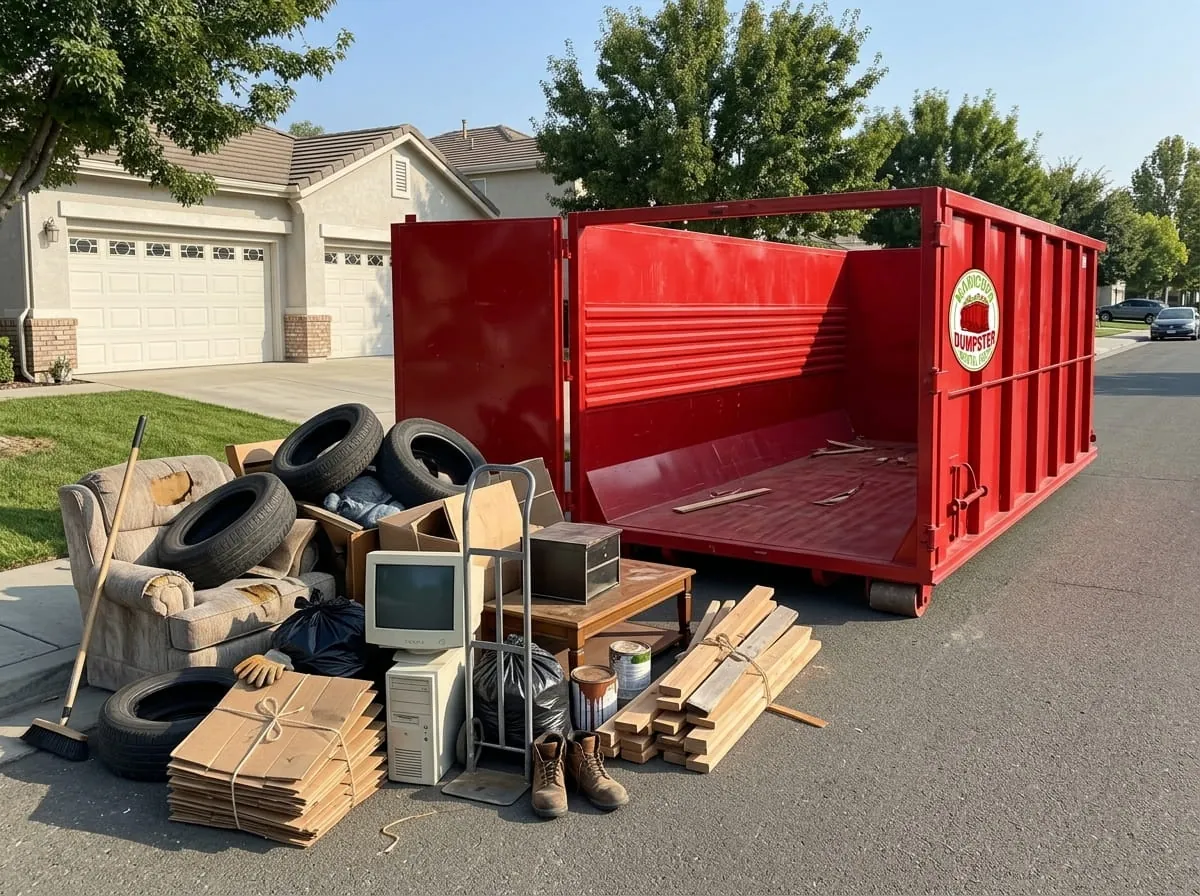
The season, and what it actually does
Monsoon season is the part of the year when this valley stops being predictable. Storms build in the afternoon and evening, arrive fast, and do most of their damage through wind rather than rain.
People new to Arizona tend to picture a wet season. What actually happens is that a cell forms, an outflow of dust arrives ahead of it at highway speed, and then a short, violent burst of wind and rain hits a landscape built for neither.
Microbursts take down bigger things than rain does
A microburst is a column of air collapsing out of a storm and spreading outward at ground level. The winds are straight-line, brief and locally severe — and they explain why storm damage here is so patchy. One street loses three trees and the next street loses nothing.
What that means practically is that the damage is structural and bulky rather than wet. The trees that come down here are a particular problem: mesquite and palo verde are shallow-rooted and top-heavy, especially when they have been over-watered by a lawn irrigation system or left unpruned for years. A mature one that goes over takes a fence and sometimes a wall with it.
The wash can run when it is dry overhead
The single most important thing to understand about desert water, and it catches newcomers every year.
Santa Rosa Wash and the other channels through this area are exactly that kind of feature. Never judge whether a wash is about to run by looking at the sky above you, never store anything you care about on low ground beside one, and never drive into a running wash to find out how deep it is.
For our purposes it also means one practical thing: we will not place a container in or immediately beside a wash bed during monsoon season, and if that is the only flat spot on a property we will find another arrangement.
What comes down in a Maricopa storm
- Trees and large limbs — mesquite and palo verde above all
- Block wall sections, where a tree or a gate has taken them
- Fence panels and gates
- Shade structures, ramadas and pergolas — the classic monsoon casualty, and extremely bulky once folded up
- Patio furniture, umbrellas and sun sails
- Roof tiles, cracked or shifted by wind and debris
- Irrigation and drip lines, torn out with root plates
- Sheds and their contents, occasionally in different places
Notice how much of that is light and awkward. That is the defining feature of storm debris here and it drives the sizing.
Sizing storm debris
| Damage | Size | Notes |
|---|---|---|
| A few limbs and patio furniture | 10 yard | Cut down first; it halves the volume |
| One mature tree down | 20 yard | Bulky and light — size up, not down |
| Tree plus fence panels | 20-30 yard | Fencing eats volume fast |
| Shade structure or ramada down | 20 yard | Awkward shapes waste space |
| Block wall section down | 10 yard, separate | Masonry is dense — its own container |
| Multiple trees, whole yard | 30 yard + swap | Phase it rather than overfilling |
The one exception to "size up" is block wall. Broken block and mortar are dense enough to run a container out of weight at a fraction of its volume, so masonry goes in its own small container rather than on top of the green waste.
The other rule that saves real money: cut it down before it goes in. A mature mesquite loaded whole occupies three or four times what the same tree occupies cut into lengths. It is the single biggest lever you have on storm cleanup cost.
Blowing dust and your open container
Something specific to this market that is easy to overlook.
An open container holding fine material — demolition rubble, dried soil, stucco debris — is a dust source when an outflow arrives, and this county takes airborne particulate seriously for good reason. If your container holds fine material through monsoon season, keep it covered between working sessions. Ask us for a tarp.
It is also worth loading heavy, flat material first and keeping the light bulky material on top and secured. Ours are hauled with the load properly covered, but between sessions the site is yours.
Everybody calls at once
The scheduling reality, and there is no way around it.
A monsoon cell does its damage in about fifteen minutes across a few square miles. Then every affected household calls a hauler the same afternoon. Capacity across the whole area is committed within hours, and it stays committed for days.
What actually helps:
- Call early rather than precisely. We would rather book you and adjust the size than have you wait two days working out exactly what you need.
- Stack material at the curb or on the drive while you wait, in a spot a truck can reach. Cut it down as you stack.
- Separate the masonry as you go. It costs nothing at that stage and saves a container later.
- Deal with anything blocking access first — a limb across a driveway is a bigger problem than a fence panel in a flowerbed.
Before the season starts
The cheapest storm cleanup is the one that does not happen.
- Prune mature trees before the season, properly and by someone who knows desert species. Thinning the canopy is what keeps a mesquite standing in a fifty mile an hour outflow.
- Check your irrigation. Shallow, frequent watering grows shallow roots and shallow roots are what fail. Deep and infrequent is what holds a tree up.
- Secure or remove shade sails when a storm is forecast — they act like a parachute bolted to your patio.
- Look at your block wall now, particularly where a tree leans over it.
- Clear loose material from the yard that a fifty mile an hour wind could pick up.
- Know where the water goes on your property, and keep anything you value off the low ground.
Need a container in Maricopa?
Call and describe the job. Three minutes on the phone gets you a size recommendation, a flat rate and a delivery window — and we will tell you if a smaller, cheaper container is the right answer.
Call (520) 217-7573