
Sizing
What Size Dumpster Do I Need? An Honest Local Guide
Most guides ask you to estimate in cubic yards. Around here the answer usually turns on two materials: roof tile and dirt.
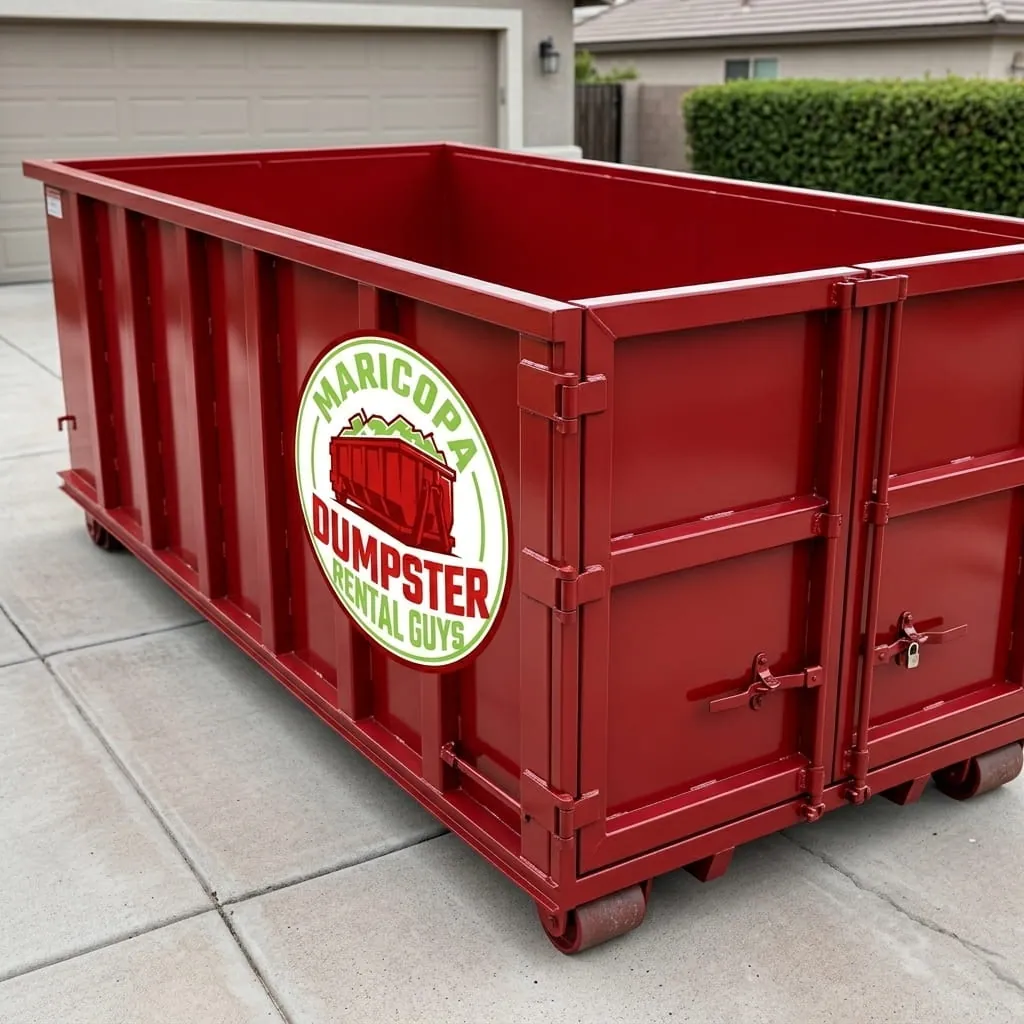
Start with the material, not the number
Almost nobody can estimate their own debris in cubic yards, and guides that ask you to are not much help. What we actually ask is three things: what are you throwing out, roughly how much in terms you can picture, and where will the container sit.
Those three answers pick the size reliably.
Volume and weight, and which binds first
Every container has two limits and you will hit one first. Volume is obvious — you cannot load above the top rail. Weight is the one people forget and the one that costs money.
Each size includes a tonnage allowance: roughly one to two tons on a 10 yard, four to five on a 30. Past that you pay a per-ton overage, which we quote before you book.
What each size really holds
10 yard — 12 ft × 8 ft × 3.5 ft
Three to four pickup loads, one to two tons. The small-job container and, more importantly here, the heavy material container: concrete, block, roof tile, soil, caliche and stucco. Low sides mean you can throw material over the wall without a ramp.
15 yard — 16 ft × 8 ft × 4 ft
Five to six pickup loads, two to three tons. The under-used size. Good for a single-room renovation, a moderate landscape job, or anywhere an HOA has opinions about how much steel is parked in front of your house.
20 yard — 22 ft × 8 ft × 4.5 ft
Seven to eight pickup loads, three to four tons. Our most common residential container by a wide margin, and the default for most Maricopa driveways — which are generous enough that it is rarely a squeeze.
30 yard — 22 ft × 8 ft × 6 ft
Ten to twelve pickup loads, four to five tons. Same footprint as the 20 with eighteen more inches of height, so it holds half again as much without needing more driveway. Right for a whole-house clear-out, a big storm job or a construction site.
Worked examples from local jobs
| Job | Size | Why |
|---|---|---|
| Bathroom renovation | 10 yard | Small volume; tile and fixtures are dense |
| Concrete tile roof tear-off | 10 yard + swaps | Extremely heavy — see the roofing guide |
| Patio slab or walkway removal | 10 yard | Concrete runs ~2 tons per cubic yard |
| Front yard turf to desert landscape | 10-15 yard | Sod and soil bind on weight, not volume |
| Block wall section down | 10 yard | Masonry — keep it separate |
| Kitchen renovation | 15-20 yard | Cabinetry eats volume; tile drives weight |
| Whole-house flooring replacement | 20 yard | Tile and thinset are heavier than they look |
| Full garage and shed clear-out | 20 yard | Bulky and light — fills volume first |
| Storm damage, one mature tree | 20 yard | Green waste is bulky — size up |
| Three-bed whole-house clear-out | 20-30 yard | Contents fill volume before weight |
| Acreage property clearance | 30 yard | Pull the scrap metal out first |
| Shingle re-roof, 24 squares | 20 yard | Around 4 tons — at the allowance |
The two heavy materials in this market
Roof tile
Concrete tile is the standard roof covering across most of Maricopa's housing, and it is the single heaviest thing we routinely haul off a residential property. A tile roof weighs several times what an asphalt shingle roof of the same area weighs.
The consequence is simple and it surprises people every time: tile goes in a 10 yard, part-filled, with multiple swaps. Never a 30. You would fill it a third of the way and it still could not legally be hauled. The roofing guide covers this properly.
Dirt, sod and caliche
The other one, and it is specific to this landscape.
Under a shallow layer of soil, most of this valley sits on caliche — a hard calcium-carbonate hardpan that behaves more like weak concrete than like soil. Anyone who has dug a footing or planted a tree here has met it.
Caliche, soil and sod are all dense, and a landscape conversion generates far more weight than the volume suggests. A front yard being converted from turf to desert planting typically wants a 10 yard, part-filled — not the 20 that the size of the pile implies.
No basements changes the arithmetic
Worth stating because customers moving here from elsewhere size jobs out of habit.
There are no basements in Maricopa. Construction here is slab-on-grade, universally. That removes an entire category of clear-out that drives container sizing in other parts of the country — there is no cellar full of thirty years of storage.
What replaces it is the garage and the shed. That is where the accumulation lives here, and garage contents are bulky and light, so those jobs size up rather than down.
The other habit worth unlearning: the interior demolition here is drywall and stucco, not plaster over timber lath. A room stripped to the studs in Maricopa produces roughly half the weight the same room would in older housing stock elsewhere. Sizing carried over from another state usually runs one size too small on volume and far too heavy on weight.
Access is easy here — HOAs are the constraint
A pleasant difference from most markets we work in.
Maricopa is a young city built almost entirely since 2000. The streets are wide, driveways are generous and clean, and there are no low branches, narrow lanes or tight historic centres to negotiate. Placement is rarely the problem it is elsewhere.
The constraint here is the HOA. Communities across the city commonly set rules on how many days a container may sit in view and sometimes on where it can go. That is worth five minutes with your CC&Rs before you book. More on permits and HOA rules here.
Out on the acreage south-west of town the picture flips: no HOA at all, but long unpaved drives where the surface and how it drains matter more than the size does.
How to describe your job on the phone
- What the material is. "Kitchen cabinets, countertop, appliances and 200 square feet of tile" tells us everything.
- Whether there is roof tile, concrete, block or dirt. Those get their own small container.
- Whether it is a landscape job. Soil and caliche change the answer completely.
- Your community, and whether it is gated. Gate access has to be arranged in advance.
- Any HOA limit on days in view, so we schedule collection to fit it.
- Driveway surface and age — boards go down regardless, but fresh concrete matters more.
Ninety seconds on the phone is the difference between a flat rate that holds and a truck that has to leave again.
Need a container in Maricopa?
Call and describe the job. Three minutes on the phone gets you a size recommendation, a flat rate and a delivery window — and we will tell you if a smaller, cheaper container is the right answer.
Call (520) 217-7573